


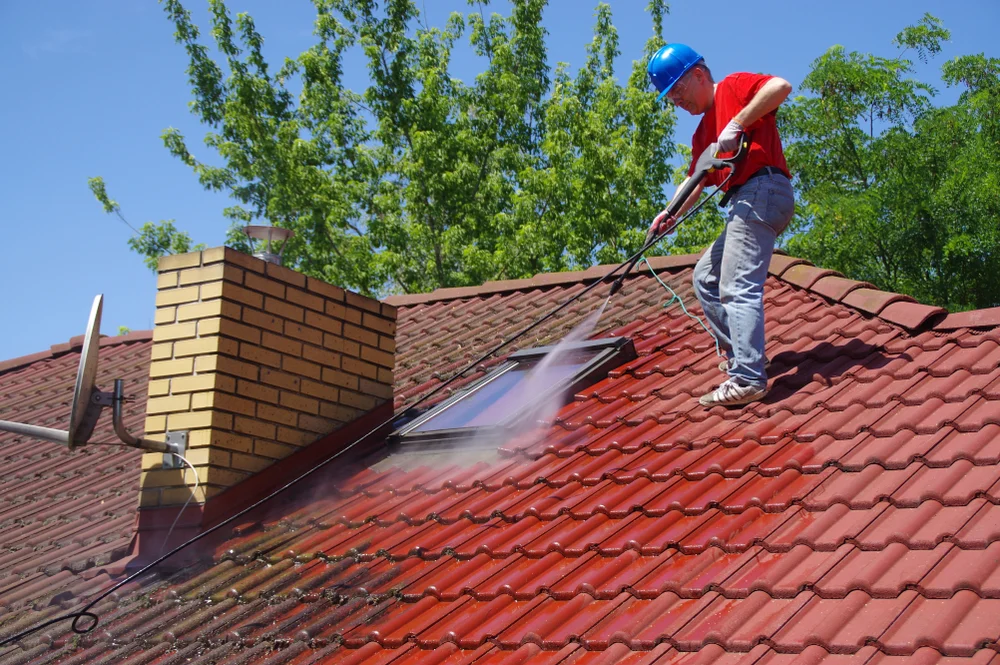
Dark or green growth on a roof can include algae, lichen or moss. Appearance alone does not establish the condition of the covering or prove that the roof needs replacing. Start with an assessment of the material, growth, drainage and access.
Inspect from a safe position
Take photographs from ground level where possible. Do not climb onto a roof or walk along its ridge to remove growth. A professional should plan suitable access and assess any fragile or deteriorating materials before work starts.
Identify defects separately
Existing leaks, loose tiles and damaged pointing need investigation. Cleaning does not repair them. If growth obscures the surface, a small test area may help a professional assess how the covering responds before proceeding.
Use a method suited to the covering
Manufacturer instructions, material and condition should guide the method. Manual removal, a suitable treatment or controlled low-pressure cleaning may be considered after assessment. High-pressure washing is not a general recommendation for every roof.
Avoid homemade roof-cleaning mixtures
Do not mix bleach, detergent, vinegar or other household products into a roof-cleaning recipe. Products should be selected for the surface and used according to their labels, including controls for runoff and the surrounding property.
Agree what is included
Ask whether the quotation covers moss collection, gutter clearance, downpipe checks, treatment and aftercare. Any repairs should be identified separately. The roof’s shade, moisture and surrounding trees affect future growth, so there is no fixed moss-free guarantee.
Read Marley’s guidance on roof moss and cleaning and see our roof cleaning and moss removal service for an assessment.